Guide
Patch Artwork & Design Guidelines
Good artwork is half the patch. These are the rules our digitisers work to — follow them and your proof comes back faster and cleaner; break them and we'll tell you exactly what to fix, free.
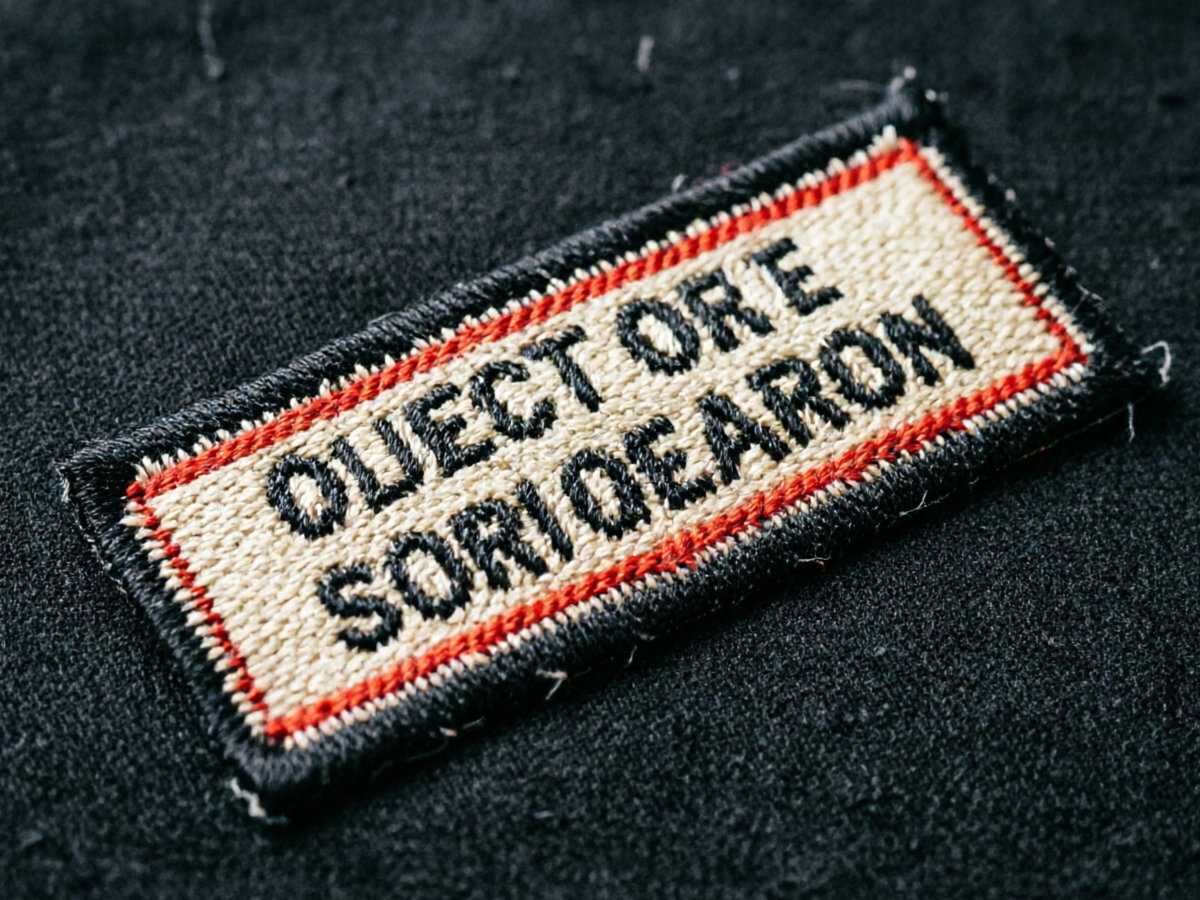
Formats, in order of preference
| Format | Type | Notes |
|---|---|---|
| AI / EPS / SVG | Vector | Ideal — scales perfectly, colours easy to map |
| Vector or raster | Great if saved with editable vectors | |
| PNG / JPG / PSD | Raster | Fine at 300dpi+ at final size; we redraw for digitising |
| Phone photo of a sketch | Raster | Genuinely fine — we'll redraw and confirm the interpretation |
The limits that matter
- Text: 5mm cap height minimum for embroidery, 3mm for woven. Below that, strokes crowd.
- Lines: 0.8mm minimum for embroidery. Thin lines should be raised to 1mm+.
- Colours: every thread colour is a real cost driver — 6–8 colours is the sweet spot; print has no limit.
- Gradients and photos: thread can't blend — simplify to solid blocks or choose printed/printed-hybrid.
- Borders: allow 2–3mm for a merrowed overlock; complex outlines get a laser-cut edge instead.
Converting a logo to embroidery
Most logos arrive designed for screens, not thread. The digitiser's job is translation: dropping micro-detail, thickening strokes, choosing stitch direction so lettering reads at arm's length. You approve the translation on the proof — nothing is stitched before sign-off.
Common questions
No. We redraw artwork as part of digitising and show you the interpretation on the proof. The free review will flag anything that needs your input.
Yes — threads are matched to Pantone references under daylight-balanced light and shown on the proof.
Never. Every file gets a human review and an honest stitchability assessment within one working day.
Keep reading
10-piece minimum · proofs before production
Get a firm quote within one working day